

I walk along the Yarra River through the seasons of the year. Each season has a beauty of its own. People come from across Melbourne to walk, or bike, along the river’s edge as if in pilgrimage, and mutter ‘G’day’ as they pass one another. An immense government funded project is underway to make this experience even more accessible. Locals take an un-paved side-track to Deep Rock Pool, my favourite place to sit and think. It is close to where the Merrie Creek merges with the Yarra, spills over a ledge and moves towards the salty water of Port Phillip Bay. For eons of time this was a meeting place of the tribes of the Kulin Nation. Here there was music, feasting, yarning, bartering, children playing together, marriages arranged and problems solved. It was a place of corroboree: stories told, danced, sung and painted. They called the river Birrarung, ‘river of mists’.
In 1835, something changed.

It happened like this. In the beginning of the nineteenth century (European time), the Kulin People noted a bewildering series of events. They sent messages along the songlines of the southern coastland. They noted sightings of a huge, strange bird, or cloud maybe, and ghost like beings … certainly beings never seen before. These white-faced beings killed seals, killed whales and gathered mimosa bark. Sealers squatted in Kulin country. These newcomers, first thought to be ghosts, were brutal beings. They abducted Kulin women and used them as domestic and sexual slaves. They used fire sticks and axes made of iron to kill those who resisted.
Then a tall man, taller than any human they had seen, (six foot six inches) staggered towards the Wathaurong people of the Kulin Nation. He was close to death from starvation, leaning on a spear as a crutch; they believed him to be an incarnation of a revered elder. They nurtured him back to life. He learned their language. He lived among various clans for three decades. He warned his new family about the big ships and deadly canons of the British people. He prepared them to be careful. He was, though they did not understand this, William Buckley, an escaped convict.

Meanwhile explorers, Hume and Hovel, discovered the grasslands around the Birrarung, surely perfect for cultivation and grazing sheep. Word of this discovery spread.
In Van Diemen’s Land a project to Conciliate with the local Aborigines had been ongoing since 1830. Batman brought with him seven ‘Aborigines’, mostly from New South Wales. They were more experienced in the work of Conciliation than he was. Handing over of ‘mere trifles’ was part of Conciliation; some called it ‘peace without justice’.
When the ship dropped anchor in the chosen place the Aboriginals on board stripped naked and established contact with the Kulin Elders. Batman wrote in his report, ‘My natives gave the chiefs and their tribe a grand corroboree tonight’. Gifts were given. On the following day John Batman met the chiefs. His role was to convince the Kulin leaders that in these dangerous times it would be safer for them if a small group of good white people could have access to the grasslands of Port Phillip in exchange for goods. They would be protected from bad white people.
We will never know what the Kulin leaders understood in this encounter. They used a pen on the treaty document.
Batman returned to Van Diemen’s Land; five Aboriginal Conciliators and two stakeholders of the Association stayed during the first year of the Treaty. The goods were provided. William Buckley was urged to reassure the people, whose language he knew so well, that the newcomers would help to ‘avenge outrages’. The Association sought the return of women previously abducted by sealers and investigated a sealer raid. Sheep and shepherds were shipped across Bass Straight. William Buckley left Port Phillip a troubled but free man and lived the rest of his life in Hobart.
In the Spring of 1836, the Government in NSW took over control of Port Phillip. There followed a rush of new arrivals looking for opportunities to claim tracts of grassland especially along the waterways. The new governor George Gipps ended indiscriminate handover of goods. Resistance to land grabs resulted in many massacres. What happened in Victoria has been described as a ‘Killing Field’. The Report on the Parliamentary Select Committee on Aboriginal Tribes. (British Settlements) noted that they were ‘treated as thieves and robbers’. They were ‘driven back into the interior as if they were dogs or kangaroos.’
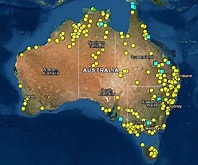
Newcastle University is mapping confirmed massacre sites where 7 or more Aboriginals died together.
Now, almost two hundred years, since that first ‘Treaty’ was signed a window of time is open for righting past wrongs. Now the call for Treaty comes from the First Peoples of the nations of Victoria, women and men together with members of the State Parliament of Victoria.
The State of Victoria is a patchwork of many nations. In 2018 the Advancing the Treaty Process with Aboriginal Victorians Act (Treaty Act) was enacted in the Victorian Parliament. This 33-page piece of legislation contains the agreed details of the way forward. It was ceremonially welcomed by representatives from First Peoples and both parties of the Victorian Government.
In an election involving all Nations, including those that overlap the boundaries of South Australia and New South Wales, the people from each nation elected representatives to a body named The First People’s Assembly of Victoria.
The Victorian Government and the First Peoples authorised an independent umpire, The Treaty Authority set up to ensure the process is fair for all and acts according to the rules set out in the Legislation of the Treaty Negotiation Framework.
A Justice Commission named Yoorrook has inquired into historic and contemporary injustices. There have been three and a half years of ‘truth telling’. It is judged to be an honest, respectful, inclusive process.
Now is the time for action.
Statewide Treaty negotiations opened with a ceremonial event at Darebin Parklands on 21 November 2024. Talks are underway.
Can we walk together to a new future? Can I dare to hope?
 Stories and Musings