
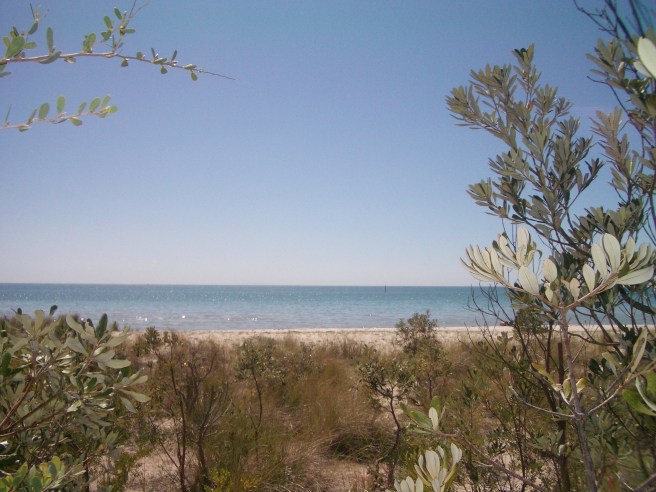
I yearn for bushland and wild Australian beaches. Without doubt this fascination started early in my life. As my proud parents pushed their first child, me, in a pram among the gum trees near our East Coburg home they would say, ‘Take deep breaths, smell the bush. Isn’t it lovely?’ We spent our holidays in the mountains or camping at the beach.
It was a family thing.
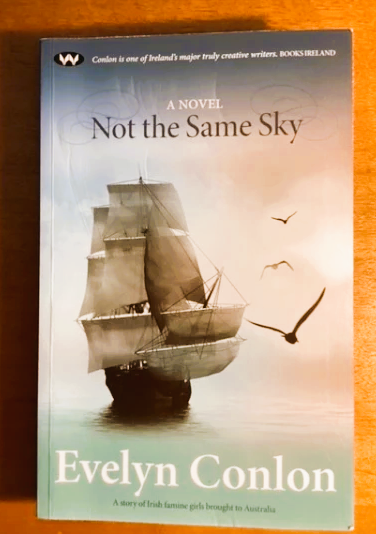
My father’s grandmother was one among 4000 Irish ‘orphan’ girls sent to Australia between 1848 and 1850. Her name was Honora O’Shea; she wasn’t an orphan, but at 15 years old she was expected to marry and settle down. After a long and hazardous journey Honora stepped on to Australian soil in Williamstown. The British government had created what it considered a win-win solution. In Ireland the workhouses were overcrowded because of famine. In Australia there was a preponderance of young men. Honora was married to a convict, George Walmsley, who had survived a flogging and nine years of imprisonment in Tasmania. They both signed their wedding certificate with an X, then headed on a bullock cart to Gippsland where George was promised a labouring job. Honora had 14 pregnancies and multiple deaths of babies. My grandmother Charlotte was her last child. Charlotte lived to watch me grow to adulthood. She loved Australian beaches.
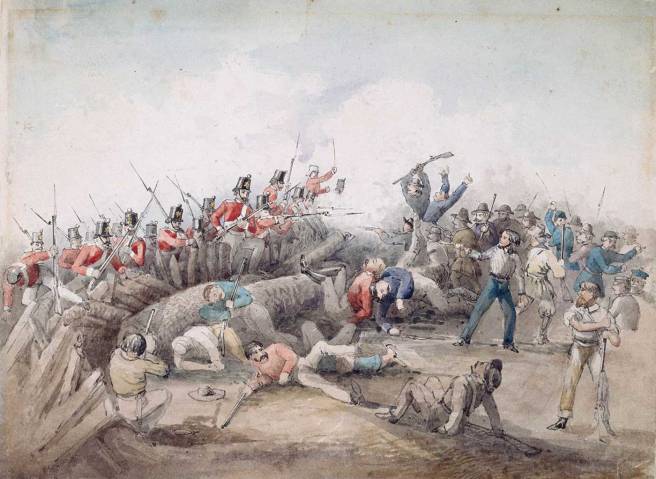
My mother’s grandmother Annie O’Neill was a small child in the compound on Eureka Hill. Her father and her brothers, Mick and Dan, panned for specs of gold on a small pocket of muddy land. When the cost of a Miners License became higher than they and other strugglers could afford, they joined in the protests. Miners burned their licenses and swore to protect each other. Mick and Dan were in the thick of it. Red-coated soldiers of the British Army marched from Melbourne to Ballarat to quell this uprising. While it was still dark on a Sunday morning, troops surrounded the compound on all sides and fired in. Mothers, children and diggers woke in panic. Though miners who had rifles fought back the fight was over in 15 minutes, and the carnage began. Troops surged in and around the compound using their bayonets to stab the corpses, the wounded, the fleeing men and women. My great uncle Mick lost an arm in battle; his brother, his baby sister and his parents escaped with trauma they never forgot. It was 1851. Throughout her life my mother blamed it all on the British.
Less than eighteen years before these two foundation stories of my family, the First Peoples of this country had never encountered a white person. They had settled on their land from time immemorial. The land was sacred. It was their mother. Country was carefully tended to provide edible plants, fish and meat for the tribes. In an extremely short time, all of this changed.
Tasmania’s First Peoples were driven off the land by settlers who established lucrative sheep stations. At that time the land mass from the tip of Cape York to the islands south of Tasmania was claimed by the British as Crown Land and named New South Wales, but settlers who were land-hungry were far from the seat of the British Empire. They took decisions into their own hands and considered the possibility of selecting more holdings on the other side of Bass Strait.
In 1931 George Augustus Robinson wrote in his journal: ‘Aboriginals would be allowed to remain in their respective districts and would have flour, tea and sugar, clothes given them, that a good white man would dwell with them who would take care of them and would not allow any bad white man to shoot them[i].’
In 1935 an illicit settlement was established in the place now called Melbourne; in power plays between Hobart, Sydney and London leaders among the new settlers rapidly claimed the Crown Lands and divided them into vast sheep runs. Wealthy settlers paid ten pounds to the administrators in Sydney for perpetual rights to the land and the water. The grassy flat lands of what is now Victoria were considered ideal for grazing sheep.
The voices of the colonisers can be heard in the words that they wrote.
Captain John Lacey on arrival in 1835 wrote: ‘A good stream of fresh water, beautiful hills and plenty of good soil and excellent grass’.
Fawkner wrote of 1835: ‘Charles and me mounted two of my horses and went out in search of the Blacks, each carrying one pistol and a sword, came upon them quite unawares and put them into great fear’
William Barak in 1836, as an eleven-year-old child of the Kulin Nation, witnessed Batman’s meeting with his tribe. He later wrote what he heard: ‘If you kill one white man white fellow will shoot you down like kangaroo’.
Neil Black on taking up a block in 1839 wrote what he was advised by earlier settlers: ‘Slaughter natives right and left [he then added] two thirds of them [settlers] does not care a single straw about taking the life of a native …’
By 1839 Melbourne was described as ‘British to the core’.
George Augustus Robinson now Chief Protector of the Aboriginal population reported in 1840: ‘Mr Hutton avowed his [policy towards the Aborigines] to be terror, to keep the natives in subjugation and fear, and to punish them wholesale, that is by tribes or communities. If a member of a tribe offends, destroy the whole. He believed they must be exterminated’. Two Aboriginal people were killed while the Chief Protector was on Mr Hutton’s property. Robinson did not dispute the legality or legitimacy of this action as there had been an attack on Hutton’s sheep grazing by the Goulburn River.
It took only three years from the first settlement in Victoria for the settlers to claim more land and displace more people than were ‘conquered’ in the whole of Australia in the prior 50 years.
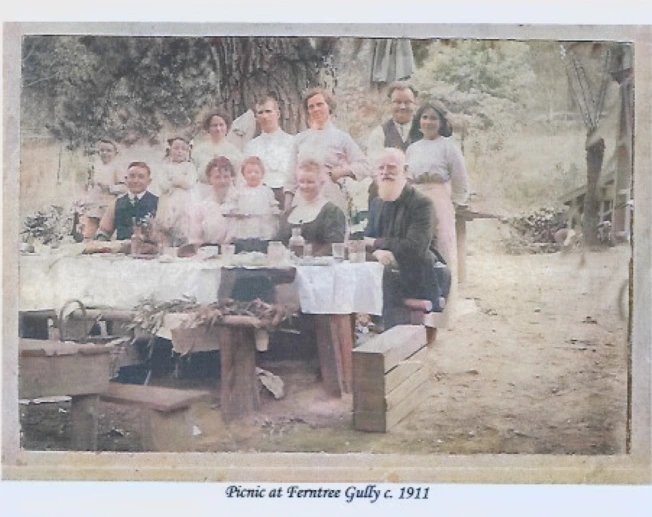
If my family knew anything of this, they did not mention it. They talked of their love of this country: the bushland, the ferny gullies, the gum trees, the rivers, the ocean. They thought of it as theirs. A poem written by a white woman proclaimed what they believed. ‘Heart of my heart, my country’. Annie and Dan are at the right side of the table in the image below, with children and grandchildren, without doubt smelling the bush.
They did not live to hear the Uluru Statement from the Heart. But I did.
What if they had heard the plea for meaningful recognition in the Australian Constitution? What if they had heard the invitation to walk with the First Peoples, step by step with an open heart, to Voice and Treaty and Truth?
There is a time for everything. Honora, George, Charlotte Annie, Dan and Mick you know the struggle for justice. When I vote an unequivocal YES, I do it with you.
From my heart.

[i] All quotes in italics are as they are recorded in 1835: The Founding of Melbourne & the Conquest of Australia by James Boyce.

